

April marks Sexual Assault Awareness Month (SAAM), bringing attention to an issue that affects millions of people each year while remaining widely underreported. Sam Houston State University continues to push for greater awareness, survivor support and prevention through education and community action.
Sexual violence is any nonconsensual sexual act or behavior inflicted on a victim. This includes rape, sexual assault, sexual harassment, unwanted sexual comments or advances and the non-consensual sharing of sexual images (including revenge porn and sextortion). Sexual violence affects people across all demographics, regardless of age, gender, or background. Cultural awareness and education are the first steps in fighting the war on sexual violence.
Statistically, if sitting at a table with five women, one of those women would be expected to have experienced rape or attempted rape within her lifetime, not including other forms of sexual assault and harassment. Additionally, 43% of men have reported sexual harassment and/or assault in their lifetime.
Sexual assault is a lot more common than you may think 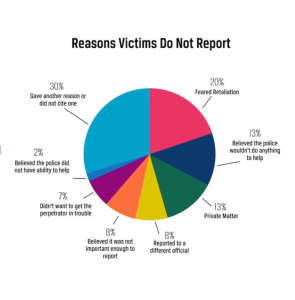
These statistics only include sexual violence reported to the police. Rape, sexual assault and sexual harassment are some of the most severely underreported crimes. It is suspected that nearly 80% of female college students victimized by sexual crimes do not report their assault to the police.
“Why didn’t you just say something?”
A lack of education and awareness regarding sexual assault created a stigma around victims, leading many to fail to report their assault. Many victims fear retaliation from their perpetrator, feel that they won’t be taken seriously by the police and/or believe that their rape was not important enough to report.
K.D. is a senior at SHSU who experienced sexual assault in September 2025. Although her identity will remain anonymous, her story speaks volumes. Students were notified of her attack via KatSafe, and the situation quickly became a laughing stock. She described the lack of support she received after deciding to report her assault.
“Honestly, even with the police officers, it was very invalidating,” said K.D. “When I went for an eyewitness to identify the man, it was very unprofessional. The officer interviewing me laughed in the middle of reading through the report.”
Invalidating the experiences of victims is common for those who speak up. In K.D.’s case, what was a violent crime was made into a joke. For some, they aren’t even believed at all.
The truth about false allegations
The frequency of false sexual assault reports is a long-standing dispute. 56% of Americans believe that false accusations of sexual harassment and violence against men are very common. False allegations are made to maliciously impact the accused. While they do happen, they are not nearly as common as some may think. Research suggests that only 2-10% of reported cases are false. Therefore, it is statistically more likely for a man to be raped than falsely accused of rape. Because of this stigma, many victims fear retaliation not just from their perpetrator, but also from those around them.
Male survivors of sexual violence
While the majority of sexual violence is aimed toward women, no demographic is safe. Millions of men are affected by it every year, ranging from unwanted sexual comments or contact to rape.
The misogynistic roots of sexual violence negatively impact men on a large scale, too. Many men who realize that they are victims fail to report their perpetrator due to the belief that they can express weakness. Others may not even believe that men can be victims of rape. One example is that a male minor victimized by an older woman is not “lucky.” This dangerous stereotype is simply a glorified version of statutory rape and should not be tolerated.
Men are commonly the least educated demographic when it comes to sexual assault awareness, stressing the importance of the advocacy and support shared during SAAM to reach everyone.
It’s never really over for the victim
Due to the wide range of stigmas and misconceptions surrounding sexual assault, 98% of perpetrators walk free while their victims are left to deal with trauma they did not ask for.
Sexual violence creates a harsh, lasting impact on every person it reaches. Most survivors experience symptoms of PTSD in the first two weeks following their attack, with some lasting long-term. The trauma experienced by victims can take a toll on their physical and mental health as well as create challenges in their personal relationships. Additionally, they are far more likely to turn to drugs as a coping mechanism, opening the door to a harmful pathway.
While K.D. shared her personal experience with life following her assault, she stated, “I’m always anxious when someone, especially a man, walks past me. My brain just automatically imagines them attacking me as they walk past me.”
A large majority of assaults going unreported amplifies the issue. If those affected fail to report, whether it be out of shame, fear, or any other reason, they cannot receive resources that will aid in their personal healing journey.
Sexual assault risks on college campuses
The Crime Victim Service Alliance (CVSA) is an on-campus organization committed to advancing awareness of resources available to crime victims. In terms of support for victims of sexual assault, CVSA provides guidance to victim resources and a platform for those who want to use their voice.
“At some point, it will affect somebody in your life or yourself, or you may realize you have had an experience in your past, but didn’t have the awareness to identify it at the time,” said CVSA E-Board member Victoria Merdano. “[SAAM] is a way to become aware, to be in a position to help others, and combat the issue entirely because you’re educated on it.”
The volume of sexual violence on campus is a large and increasing problem in the United States. If students do not have accurate information on prevention, their risk of victimization dramatically increases.
Walking alone at night as a woman can be terrifying. However, the majority of the threat is not strangers in the dark. Among college women, 9 out of 10 victims of sexual assault knew and trusted the person who harmed them. Further, alcohol is often used as a tool to strategically commit sexual assault. While date rape drugs from strangers at a bar are a serious concern, students must continue to remain aware of their company and implement safe drinking practices.
“I’ve come across a lot of students who don’t exactly know what consent is,” said Medrano, “which is really important on college campuses.” Without general education on sexual violence, people may not be able to identify when they are a perpetrator or a victim. Consent is the one thing that differentiates sex from sexual assault.
Yes. You need consent.
According to the National Sexual Violence Resource Center, “Consent is an affirmative agreement to do something, either sexual or nonsexual. Consent is an enthusiastic, clearly communicated, and ongoing ‘yes.” You can’t rely on past sexual interactions and should never assume consent. The absence of “no” is not a “yes.” When sex is consensual, it means everyone involved has agreed to what they are doing and has given their permission. Nonconsensual sex is rape.”
A common device used to determine the terms of consent is the F.R.I.E.S. acronym, outlining that consent is:
- Freely given without pressure, coercion, or intoxication.
- Reversible and able to be withdrawn at any time.
- Informed, having everyone involved aware of what is being agreed upon.
- Enthusiastically given with more than just an “okay” or “fine.”
- Specific, because agreeing to one act does not automatically mean consent is given for all.
Sexual violence is more than just rape
Any nonconsensual sexual act is considered sexual assault. “People don’t realize there are so many different ways of being assaulted. Being raped is just the only standard people think of,” said K.D.
Because of this lack of awareness, many victims of sexual assault are not even aware that they were assaulted. While a victim may feel violated, some believe that their experience is not as serious or valid as others’.
Sexual harassment and assault extend much farther beyond forceful rape. Sex after gaining consent through coercion or repeated requests is not consensual sex; it’s rape. Fondling or groping of any area not permitted by the victim is not ‘no big deal,’ it’s sexual assault. Unwanted sexual comments and catcalling are not flattering; it’s sexual harassment.
In the digital age, sexual harassment has extended itself to the screen. Online sexual harassment can include:
- Cyber flashing. Don’t send a picture that the person on the other end hasn’t asked for.
- Stalking
- Non-consensual sharing of intimate images is also known as revenge porn.
- Deep fakes
- Impersonation
- Sextortion, which is the blackmailing of an individual for sexual material.
When victimized online, the effects extend from the digital realm into their personal lives. Victims experience an impact so vast that they develop a feeling of helplessness and some are even driven to develop suicidal ideation.
A common piece of advice given to prevent this is to simply not take or share intimate images. Avoiding or thoughtfully handling the sharing of such material is a clever practice, but it does not fully prevent the issue. With the rise of deep fakes and AI-generated content, nude images can be created without having ever been taken.
Students have a responsibility to report and refuse to contribute to online sexual harassment.
Hold yourself and others accountable
While one can be informed and act upon preventing the personal perpetration or victimization of rape, the social responsibility does not stop there. SHSU CVSA members stressed the importance of creating a societal shift in how sex is viewed and discussed.
“When people make jokes about [sexual violence], call them on it. Watch the language in general when people talk about sex,” said E-Board member Riley Wickham.
In a theoretical circle of 10 people, one may make a “harmless” joke regarding sexual violence or hatred towards women. One man may add on to the joke, four could laugh and three might stay silent. One person speaking up makes a big difference. While it’s easy to avoid a possibly uncomfortable situation or blend in to be liked, societal change begins with personal advocacy.
Not only must the volume of prevention increase dramatically, but a space of understanding needs to be made for victims. Merdano described the patience and kindness required of victims, stating, “healing takes different shapes and forms for everybody. It really just depends on what that person may need to grow past what happened to them. It can only take a month, or it can take years.”
From a victim’s perspective, K.D. described the type of support she wished she had during her healing journey. “I think we just need to listen to people’s stories more and not expect them to get over it in two months,” said K.D. “Stop being so professional and be able to say, ‘I’m sorry this happened to you.’ Just have empathy.”
Resources are available
Resources are abundant and readily available. Despite popular belief, they are for more than just victims handling the aftermath of an assault.
“I feel like we’re only made aware of resources after it happens,” said K.D.
Students utilizing educational resources to become aware of the issue are better equipped to prevent becoming a perpetrator, victim, or bystander of sexual assault.
SHSU has several campus resources that students experiencing sexual violence can reach out to, including the police, Dean of Students’ Office, Counseling Center, Health Center and Residence Life. Anyone who witnesses, knows about, or experiences sexual harassment on campus can file a confidential report with the Title IX office through the phone, in person, or online.
Short-term emergency support is available and can be confidential if the caller chooses. RAINN (Rape, Abuse & Incest National Network) operates the National Sexual Assault Hotline and provides anonymous, confidential support via phone or online chat.
Safe Horizon also offers emergency support, advocacy, and long-term solutions. They offer hotlines, counseling, and legal assistance. Further, victims can navigate to the National Sexual Violence Resource Center, which offers mental-health healing materials and resources for legal aid.
Victims who choose not to report to law enforcement can seek out mental-health support resources online, whether on their own or with the help of a loved one.
President of CVSA Bailey Surby stressed that “you have a voice and someone is going to listen to it. Don’t feel like you’re alone in this and that you can’t speak up. There are various resources and people who are willing to help you out and be there for you. The resources don’t have to be like the SAAFE House. They can be teachers, family, a priest- and even us.”
Kats Paws for Awareness
Over the past month, the SHSU campus has been honoring SAAM through Kats Paws for Awareness, which has included a multitude of informational seminars and awareness events. CVSA annually sets up a display of denim clothing in the plaza in observance of Denim Day and to serve as a reminder that we should not look away from the impact of sexual violence because it can happen to anyone, even yourself or someone you love.
As April comes to a close, the need to remain aware and informed on sexual violence does not diminish. Bearkats have a responsibility to be educated on the parameters of consent, create an open and understanding space for survivors, and hold those around them accountable for contributing to the stigma surrounding them. Only then will the fight against sexual violence grow.


