
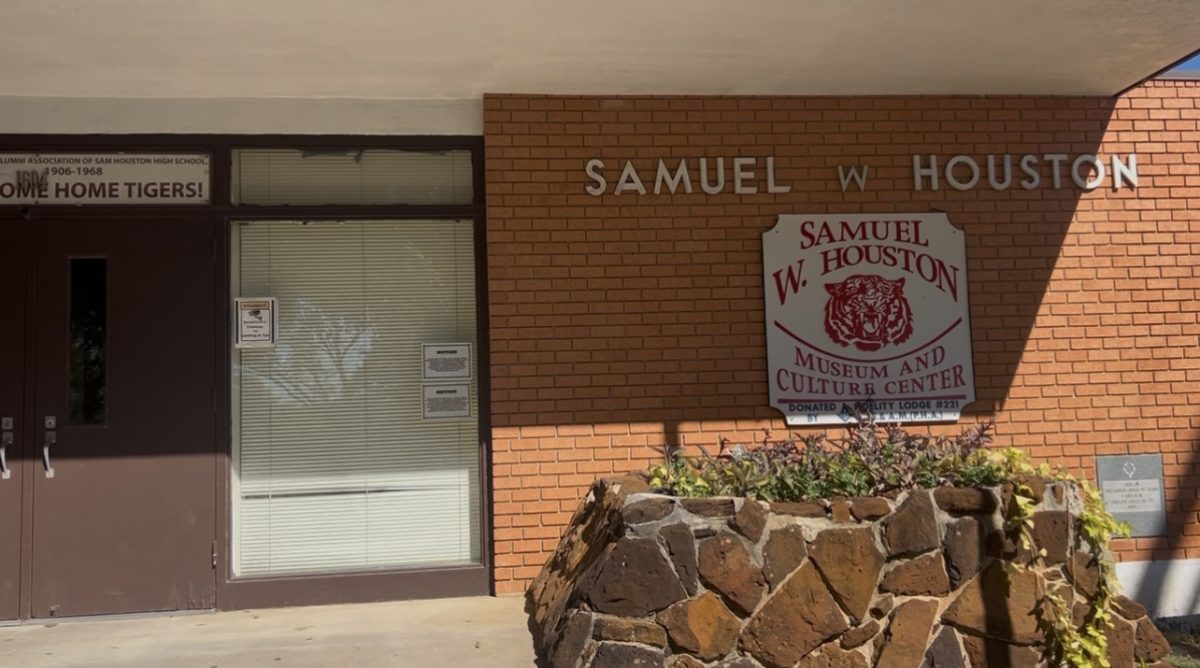
In a historic Black neighborhood originally known as Rogersville, the Samuel Walker Houston Museum and Cultural Center serves as both a community center and an archive of memories.
The Samuel Walker Houston High School, founded at 1604 10th Street in Huntsville, closed in the late 1960s. But it continues the legacy of civil rights pioneer and educator Samuel Walker Houston.
“The museum was designed to preserve and perpetuate the legacy of one of Texas’ greatest educators,” according to its website.
A heritage based on service
According to a Black History Month article released by the museum, “Samuel was surrounded by educated men who encouraged him to pursue his studies outside of Texas.”
Houston, who was born into slavery, created the Galilee Community School, attended Hampton, Atlanta and Howard Universities, and served as a community leader in Walker County.
A permanent archive for artifacts, historical memorabilia, photographs and official documents relating to the life of the school’s founder is how the museum keeps history alive.
Today’s voices: Connecting the past and the future
Today, Houston’s legacy lives on through the works of Richard Harrison, president of the National Alumni Association of Samuel Walker Houton High School.
Harrison attended Sam Houston Elementary prior to its closing during integration, and he graduated from Huntsville’s public school system in 1969.
“The community center re-establishes and reconnects the roots of the citizens to Rogersville,” Harrison said.
The center has continued to grow into a place for connection, celebration, and education while under Harrison’s direction.
“We celebrate of course the Black history program, community activities, a lot of activities to prepare you for life, hosted wedding celebrations, motivational speakers,” Harrison said.
Harrison highlighted that the museum’s mission also considers the future.
“We’ve merged with the historical elementary group so younger people can take leadership,” he explained.
Dee Howard Mullins, a resident of Huntsville and a former member of the city council, believes that the museum is situated on historic grounds that are filled with memories.
“This was originally the elementary school for all the Black children,” she said. “I lived on Sixth Street and walked two miles to school every day.”
She identifies her father, Percy Howard, who served as the school’s final principal prior to integration, when examining old photos on the museum’s walls.
“These educators were residents of our neighborhood. They accompanied us to church. Your parents were informed if you caused trouble at school,” Mullins said, smiling as she recalled how close-knit the community was.
Why the center matters
In addition to preserving photographs and yearbooks, the center serves as a vibrant hub of life-skills programs and youth leadership development.
Harrison notes the center is “actively involving the younger generation” after merging with the historical elementary group to sustain its mission.
As for Harrison, the mission remains deeply personal. He would describe this place in one word: “Inspirational.”
“It reminds us of where we came from, where we need to go, and provides some means to get there,” he said. “You can’t really know where you’re going unless you know where you’re coming from.”
The center is still open to anyone who wants to learn about history, and it is also available to be rented for events. To connect with the museum or plan a visit, call (936) 291-2119.